
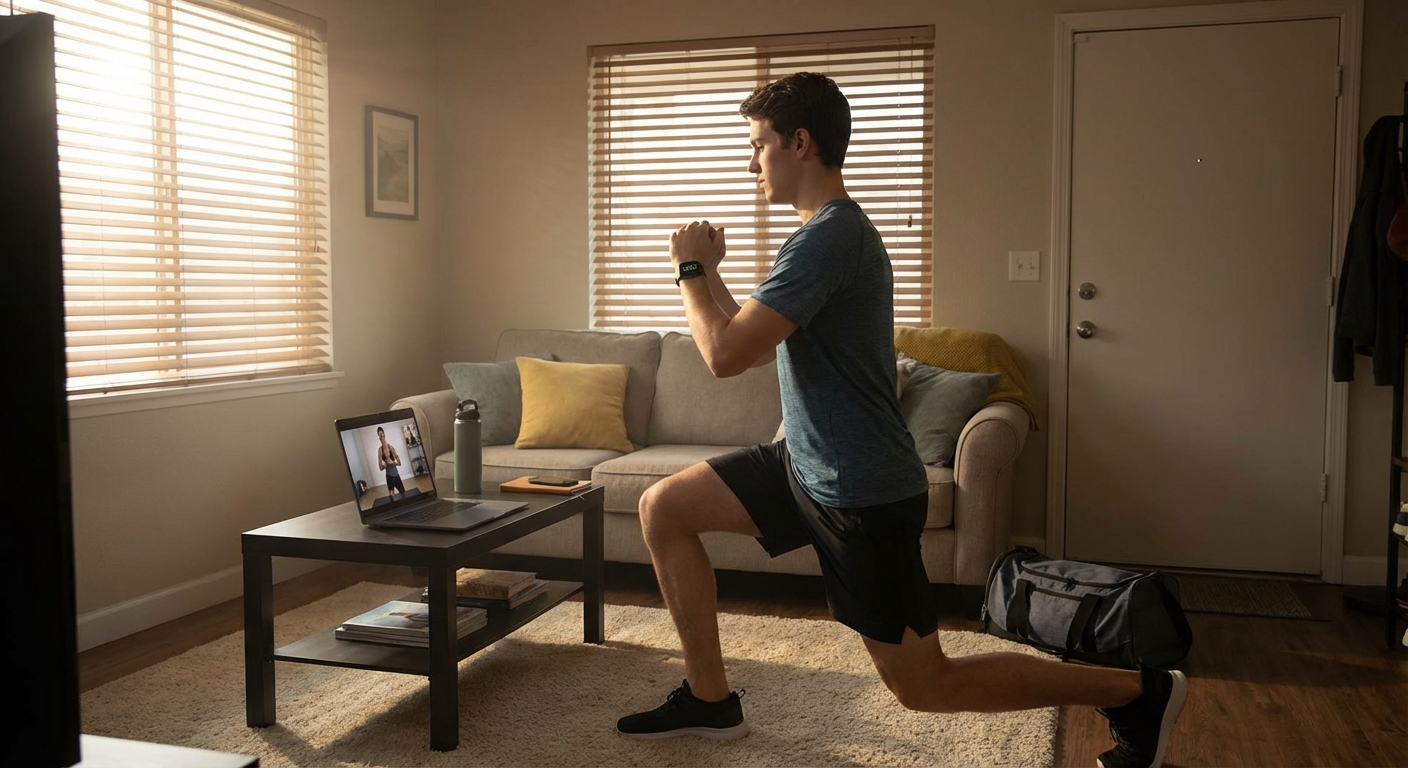
Long workouts sound great in theory — until real life kicks in. Between work, family, and responsibilities, finding an hour to train can feel impossible.
Fitness for People Who Don’t Have Time
Here’s the good news: you can build genuine strength, stamina, and vitality in just 20 minutes a day, a few days a week, if you’re intentional.
This guide walks you through a step-by-step 20-minute workout system you can do almost anywhere, no equipment required (with options to level up).
What Makes 20 Minutes Actually Effective?
It’s not about duration; it’s about density — how much meaningful work you do in the time you have.
A smart 20-minute session includes:
Warm-up – wake up joints and elevate heart rate
Compound strength moves – work many muscles at once
Heart rate spikes – short bursts of higher effort
Cool-down – bring your body down gently
This structure builds muscle, challenges your heart, and supports flexibility — the trifecta of functional fitness.
The 20-Minute Vitality Workout Blueprint
You’ll train in three parts:
- Part 1: Warm-up (3–4 minutes)
- Part 2: Strength + Cardio Circuit (12–14 minutes)
- Part 3: Cool-down + Mobility (2–4 minutes)
Do this 3 times per week on non-consecutive days.
Part 1 – Warm-up (3–4 minutes)
Move through these exercises with control:
- 30 seconds: marching in place
- 30 seconds: arm circles (forward and backward)
- 30 seconds: hip circles
- 30 seconds: gentle bodyweight squats
- 30 seconds: cat-cow spine waves (or standing side reaches)
- 30–60 seconds: brisk walking or light jogging in place
Goal: Feel warm, slightly breathy, but not exhausted.
Part 2 – Strength + Cardio Circuit (12–14 minutes)
Set a timer for 12–14 minutes and cycle continuously through the following exercises with good form. Rest briefly (15–30 seconds) only as needed.
Squats or Chair Sit-to-Stands – 10–15 reps
- Stand tall, sit back as if into a chair, knees tracking over toes, then stand up with control.
Push-ups – 6–10 reps
- Use a wall, counter, or floor depending on your strength.
Hip Hinge or Glute Bridges – 10–15 reps
- For hip hinges: push hips back with a flat back, then stand tall. - For bridges: lying on your back, lift hips until shoulders, hips, and knees form a line.
Rows (Band, Dumbbells, or Backpack) – 10–12 reps
- Hinge slightly, squeeze shoulder blades together as you pull.
Cardio Burst – 30–45 seconds
- Options: fast marching, step-ups, stair climbing, or low-impact jumping jacks.
Core Hold – 20–30 seconds
- Options: plank on knees, dead bug, or side plank.
Continue looping through at a steady pace.
Why this works:
- Hits all major muscle groups
- Keeps heart rate elevated without extreme impact
- Uses compound moves to maximize results in minimum time
Part 3 – Cool-down + Mobility (2–4 minutes)
Finish with:
- 1 minute: slow walking or marching in place
- 1–3 minutes: stretching
- Hamstrings (reach toward toes)
- Hip flexors (gentle lunge stretch)
- Chest (hands behind back or door-frame stretch)
- Upper back (hug yourself and round gently)
Breathe deeply — inhale through your nose, exhale longer through your mouth.
Progressing the 20-Minute Workout Over Time
As this routine becomes easier, your body is ready for more challenge.
Progression levers:
- Increase reps slightly (e.g., from 10 to 12–15)
- Add resistance (dumbbells, backpack, or bands)
- Reduce rest time between moves
- Extend circuit time from 12 to 14 minutes
Listen to your body, not your ego. Push enough to feel challenged but still able to maintain form.
5 Actionable Tips to Boost Vitality and Wellness Naturally With Short Workouts
1. Schedule Your 20 Minutes During Your Energy Sweet Spot
Everyone has a time of day when they naturally feel more alert.
- Morning: great for consistency and starting strong
- Midday: can break up work fatigue
- Early evening: stress relief after the day
Pick your best window and lock it in like an appointment.
2. Pair Your Workout With a Trigger Habit
Make your 20-minute workout automatic by attaching it to something you already do:
- After your morning coffee
- Right after logging off work
- After school drop-off or pickup
This creates a mental shortcut: “When I do X, I do my workout.”
3. Hydrate Before and After
Even slight dehydration can make a short workout feel harder.
- Drink a glass of water 15–30 minutes before you start.
- Have another glass afterward, especially if you sweat.
Proper hydration supports muscle contractions, circulation, and recovery — all critical for staying energized.
4. Use Music to Drive Intensity Naturally
An energizing playlist can elevate effort without extra willpower.
- Choose upbeat songs for the circuit
- Use calmer tracks for warm-up and cool-down
Music syncs with your nervous system, improving focus, enjoyment, and resilience during challenging sets.
5. End Every Session With One Gratitude Thought
Each time you finish a workout, acknowledge what your body just did:
- “I’m grateful my legs carried me through that.”
- “My heart and lungs are getting stronger.”
This simple mindset shift builds a positive association with exercise, turning it from obligation into appreciation — a crucial ingredient for long-term consistency.
Making 20 Minutes a Cornerstone of Your Lifestyle
You don’t need perfect conditions, fancy equipment, or huge time blocks to get fit. You need:
- A clear, repeatable plan
- A realistic time frame (20 minutes)
- A commitment to show up more often than not
Let this 20-minute vitality workout be your foundation. As your strength and confidence grow, you can expand, tweak, and customize. For now, focus on the win:
Three focused sessions a week = a stronger, more energized you. Start the clock and start moving.