
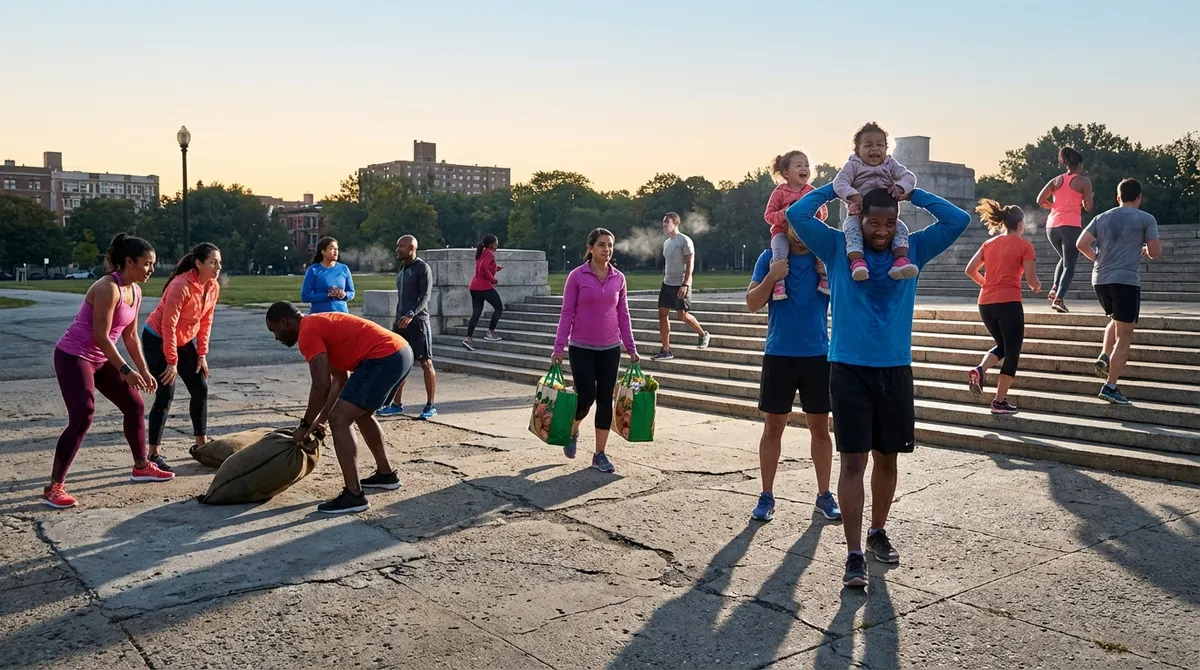
If your workouts don’t make groceries feel lighter, stairs feel shorter, or mornings less brutal…what’s the point? Fitness isn’t just about gym selfies or hitting some random step count—it’s about building a body that backs you up in real life. The good news: you don’t need fancy equipment, a perfect schedule, or a “hardcore” personality to feel a noticeable boost in vitality.
This guide breaks down how to train in a way that gives you more energy, better mood, and real-world strength—plus five concrete, natural ways to upgrade your wellness starting today.
Rethink Fitness: Train for the Life You Actually Live
Most people split their world in two: “workout time” and “real life.” That’s a huge missed opportunity. Your body doesn’t care if you’re at the gym or carrying laundry up the stairs—it just responds to the total stress and movement you give it.
When you start seeing fitness as “training for life,” everything shifts. Suddenly:
- Squats become “get up from the couch, floor, and car with ease.”
- Core work becomes “no more aching back after standing or sitting.”
- Cardio becomes “climbing stairs without gasping for air.”
This mindset helps you focus on movements that matter: pushing, pulling, hinging, squatting, rotating, and carrying. These patterns show up in almost everything you do: lifting kids, loading the car, garden work, even sitting at your desk. Training them directly builds vitality you can feel, not just muscles you can see.
Tip 1: Build a “Movement Minimum” You Can Hit on Your Worst Day
Instead of chasing the perfect workout, create a “movement minimum” you can nail even on a chaotic, low-energy day. This keeps your body in motion, your energy more stable, and your routine intact—without the all-or-nothing crash.
A simple daily movement minimum could look like:
- 5 minutes of brisk walking
- 10 bodyweight squats
- 10 wall or counter push-ups
- 30 seconds of marching in place or light jogging on the spot
That’s it. If you feel great, do more. If you’re wiped, you still win the day by hitting the minimum.
Why this boosts vitality:
- Blood flow improves, delivering more oxygen and nutrients to your muscles and brain.
- Circulation helps regulate energy, reducing the “midday slump.”
- Mood lifts thanks to endorphins and other movement-related brain chemicals.
- Consistency signals your body that movement is a non-negotiable part of your life, which leads to better adaptation over time.
Make it friction-free: pair your movement minimum with an existing habit—right after coffee, before your shower, or immediately after shutting your laptop for the day.
Tip 2: Train Your Breath Like It’s a Muscle
If you only think about breathing when you’re out of breath, you’re leaving energy on the table. Breath is one of the fastest levers for calming your nervous system, improving performance, and stabilizing your core.
Try this simple “box breath” routine once or twice a day:
- Inhale through your nose for 4 seconds.
- Hold your breath for 4 seconds.
- Exhale slowly through your mouth for 4 seconds.
- Hold again for 4 seconds.
- Repeat for 4–6 cycles.
How this supports vitality and fitness:
- Activates your parasympathetic nervous system (your “rest and digest” mode), helping reduce stress and muscle tension.
- Improves focus during workouts, so you move with better control and alignment.
- Enhances endurance by training more efficient, deeper breathing patterns.
- Helps recovery by lowering heart rate and promoting calm after intense effort.
Bonus: Practice nasal breathing (in through the nose, out through the nose or mouth) during low-intensity activity like walking. Over time, this can improve oxygen efficiency and make your regular pace feel easier.
Tip 3: Make Strength Training Non-Negotiable (Even If It’s Just 10 Minutes)
If you want more energy, better balance, and a body that ages well, strength training is not optional—it’s foundational. You don’t need heavy barbells or a full gym; your body weight and a couple of household items can be extremely effective.
Aim for 2–3 short strength sessions per week focused on big, practical movements:
- Squat pattern: Sit to stand from a chair, bodyweight squats, or supported squats holding a countertop.
- Hinge pattern: Hip hinges or deadlifts with a backpack or grocery bag.
- Push: Wall, counter, or floor push-ups.
- Pull: Doorframe row with a towel (if safe), resistance band rows, or pulling light objects toward you from the floor.
- Carry: Farmer’s carry with grocery bags, water jugs, or a backpack.
A simple 10-minute routine:
- 30 seconds squats, 30 seconds rest
- 30 seconds push-ups (any version), 30 seconds rest
- 30 seconds hip hinges or deadlifts, 30 seconds rest
- 30 seconds rows, 30 seconds rest
- 30 seconds loaded carry (walk back and forth holding weight), 30 seconds rest
- Repeat the circuit once
Benefits for vitality and wellness:
- More muscle mass = higher resting metabolism and better blood sugar control.
- Stronger joints and bones, especially with age.
- Better posture, reducing strain and fatigue during daily activities.
- Increased confidence in what your body can do, not just how it looks.
Tip 4: Use “Movement Snacks” to Undo Sitting and Boost Energy
Most of us don’t just “sit a lot”—we sit in the same way, for hours, without changing position. That’s when stiffness, tight hips, cranky lower backs, and sluggish energy really pile up.
Movement snacks are mini bursts of targeted movement you sprinkle through your day. Think 30–90 seconds, 4–8 times daily. They require almost no willpower once they’re built into your routine.
Movement snack ideas you can plug in between tasks:
- Desk chest opener: Clasp your hands behind your back and gently open your chest for 30 seconds.
- Hip reset: Stand up, hold onto a stable surface, and gently swing each leg forward and back for 20–30 swings.
- Calf pumps: Rise onto your toes and slowly lower back down for 15–20 reps.
- Spine twist: Sit or stand tall, rotate gently to look over your right shoulder, then left, 5–8 times each side.
- Neck release: Slowly tilt your ear toward your shoulder on each side, pausing in any tight spots.
Why this matters for your energy:
- Reduces stiffness that silently drains your enthusiasm to move.
- Keeps blood flowing to muscles and brain, which can sharpen focus.
- Interrupts long stretches of sedentary time, which is linked with higher risk of chronic issues—even in people who “exercise.”
Set a recurring reminder on your phone or pair a movement snack with recurring events: every meeting end, every bathroom break, or whenever you refill your water.
Tip 5: Sync Your Training with Your Natural Energy Peaks
Instead of fighting your body’s natural rhythms, use them. Your daily energy naturally rises and falls based on sleep, hormones, light exposure, nutrition, and stress. Training in sync with those rhythms makes workouts feel more doable and less like a battle.
How to work with your own energy curve:
- Morning people: Do strength or higher-intensity work in the morning when you feel sharp; use gentle walks and stretching at night.
- Afternoon energy peakers: Schedule main workouts around lunch or midafternoon; use light mobility or breathwork after waking and before bed.
- Evening trainers: Keep late-day intensity moderate if it interferes with sleep; use mornings for easy movement minimums and sunlight.
Why syncing matters:
- You’re more likely to train consistently if you stop picking time slots that fight your biology.
- Performance and enjoyment both increase when training matches when you naturally feel most capable.
- Sleep often improves when you don’t hammer your system with intense training too close to bedtime.
If you’re not sure when your peak is, track your energy for a week. Every 3–4 hours, quickly rate your energy from 1–10. Patterns usually pop out fast; use them to anchor your training time.
Conclusion
You don’t need perfection, punishment, or a “fitness personality” to feel more alive in your own body. You need smart, realistic habits that your nervous system, joints, muscles, and energy actually appreciate.
When you:
- Keep a simple movement minimum,
- Train your breath on purpose,
- Make strength training non-negotiable (even in tiny doses),
- Sprinkle in movement snacks to fight the stiffness creep, and
- Align workouts with your natural energy curve,
you’re not just “working out”—you’re building a body that makes your everyday life feel lighter, steadier, and more powerful.
Start with one tip today, not all five. Let your vitality be something you build, layer by layer, until feeling better isn’t a surprise anymore—it’s your new normal.
Sources
- Physical Activity Guidelines for Americans, 2nd Edition (HHS) - U.S. Department of Health and Human Services guidelines on recommended activity levels and health benefits
- World Health Organization – Physical Activity - Overview of how regular movement supports health and reduces disease risk
- Harvard T.H. Chan School of Public Health – Benefits of Strength Training - Evidence-based breakdown of why resistance training is crucial for metabolism, aging, and overall health
- Cleveland Clinic – Diaphragmatic Breathing - Practical explanation of breathing techniques and their effect on stress and the nervous system
- American Heart Association – Move More Throughout the Day - Recommendations on adding short bouts of movement into daily routines to support cardiovascular health