
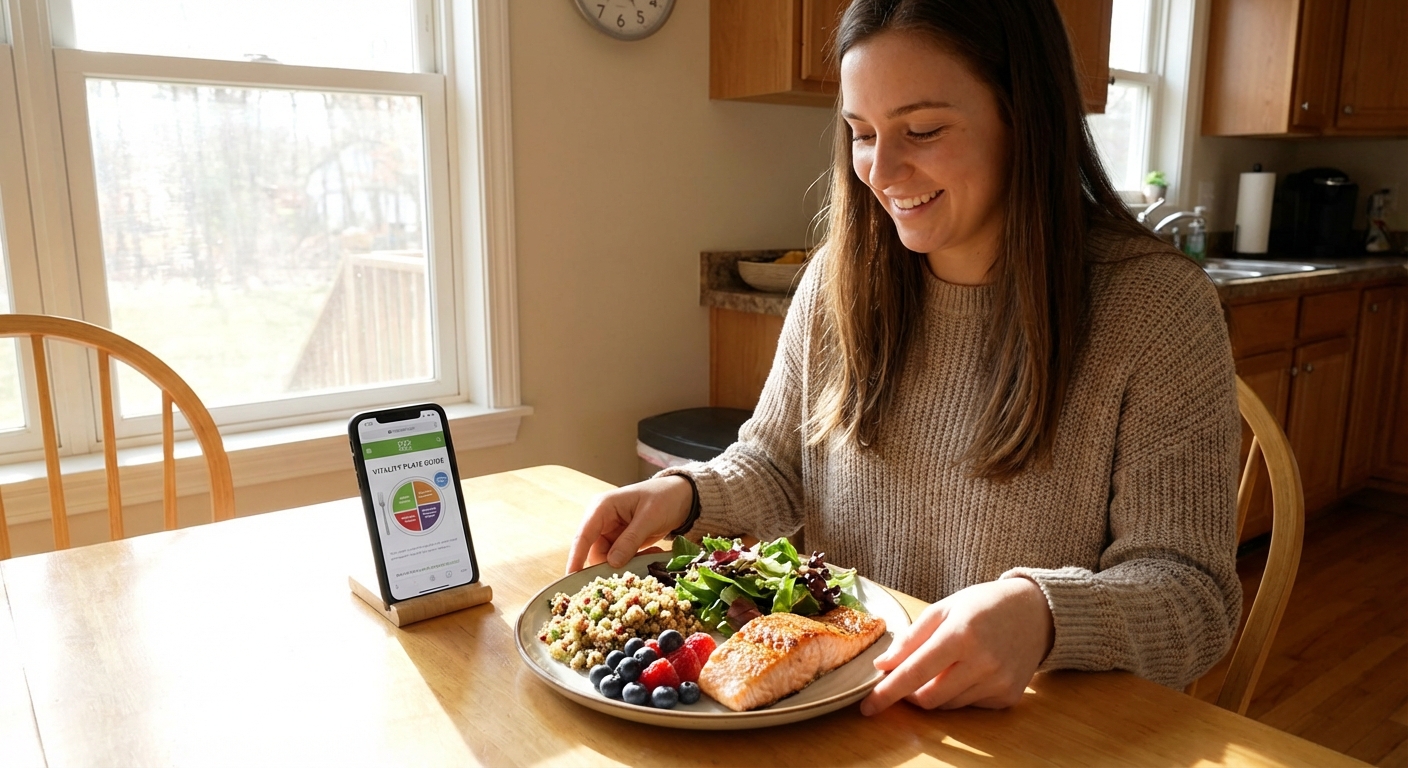
Feeling sluggish isn’t normal—it’s common. The good news? You don’t need a perfect diet, exotic superfoods, or complicated rules to feel more vibrant. You need simple, repeatable, nutrient-smart choices.
Nutrition That Actually Makes You Feel Alive
This beginner-friendly guide walks you through how to build a plate that supports energy, mood, and long-term health—without obsessing over every bite.
Step 1: Understand What a Vitality-Boosting Plate Looks Like
Think of your plate as a power grid for your body. Each section delivers its own type of fuel.
A balanced plate for vitality usually includes:
Fiber-rich plants (½ plate)
- Vegetables: leafy greens, broccoli, peppers, carrots, zucchini - Fruits: berries, oranges, apples, kiwi Fiber feeds your gut bacteria, stabilizes blood sugar, and supports digestion.
Quality protein (¼ plate)
- Animal: eggs, fish, chicken, turkey, plain yogurt, cottage cheese - Plant: lentils, beans, tofu, tempeh, edamame, chickpeas Protein helps maintain muscle, keeps you full, and supports immune and hormone functions.
Smart carbohydrates (¼ plate)
- Whole grains: brown rice, quinoa, buckwheat, oats, whole grain pasta - Starchy veggies: potatoes, sweet potatoes, corn, peas These provide steady fuel when paired with protein and fiber.
Healthy fats (1–2 small portions)
- Sources: olive oil, avocado, nuts, seeds, nut butters, fatty fish Fats help absorb vitamins A, D, E, and K and support brain and hormone health.
If you don’t like measuring, use your hand:
- Palm = protein
- Fist = veggies
- Cupped hand = carbs
- Thumb = fat
Step 2: Focus on Food Quality, Not Strict Rules
You don’t have to cut out everything you love. Aim for an 80/20 approach:
- 80% of the time: whole, minimally processed, nutrient-dense foods
- 20% of the time: enjoyable extras—desserts, snacks, meals out
When choosing foods, ask: “Is this close to its natural form?”
- Apple vs. apple juice
- Baked potato vs. potato chips
- Oatmeal vs. frosted cereal
The closer food is to how it grows, the more nutrition your body receives.
Step 3: Master the Art of Simple Meal Building
You don’t need chef-level skills. Base your meals on a plug-and-play formula:
Protein + Fiber + Color + Healthy Fat
Example Meal Combos
- Breakfast:
Scrambled eggs (protein) + sautéed spinach and tomatoes (fiber + color) + whole grain toast (smart carb) + olive oil for cooking (fat).
- Lunch:
Mixed greens salad (fiber + color) + grilled chicken or chickpeas (protein) + quinoa (carb) + avocado and seeds (fat).
- Dinner:
Baked salmon or tofu (protein + healthy fat) + roasted vegetables (fiber + color) + small serving of brown rice (carb).
Meal repetition is fine—variety matters over weeks, not every single day.
Step 4: Timing Your Meals for Consistent Energy
Swinging between starving and stuffed can drain vitality. A more balanced approach:
- Eat every 3–5 hours while awake.
- Include protein in each meal to keep hunger and energy stable.
- Avoid going long stretches with only caffeine and no food.
If you feel:
- Shaky, irritable, or overly hungry
- Craving sugary or ultra-processed foods
…it’s often a sign your last meal was unbalanced or too small.
5 Actionable Tips to Boost Vitality Naturally
Tip 1: Add Before You Subtract
Instead of focusing on what to cut out, focus on what to add in:
- Add a serving of veggies to at least 2 meals per day.
- Add one piece of fruit as a snack instead of reaching for something processed.
- Add a glass of water before each meal.
As you add nourishing foods, you’ll usually crave less of the draining ones.
Tip 2: Prioritize Protein at Every Meal
Protein is your stay-full, feel-strong nutrient. Many people under-eat it, especially at breakfast.
Easy upgrades:
- Add Greek yogurt or eggs to breakfast.
- Add beans or lentils to soups, salads, and pastas.
- Keep nuts or roasted chickpeas on hand for quick snacks.
Notice how your cravings and energy change when every meal includes a decent protein source.
Tip 3: Crowd Your Plate With Color
Aim for 3+ colors per meal. Colorful plants bring antioxidants that:
- Support brain function
- Protect cells from everyday stress
- Help reduce inflammation in the body
No need for perfection—frozen and canned (rinsed, low-sodium) vegetables and fruits absolutely count.
Tip 4: Make Hydration Effortless
Tie your water intake to routines you already have:
- After brushing your teeth → 1 glass
- With each meal → 1 glass
- Before and after workouts → 1 glass each
If plain water is boring, try:
- Infused water with orange slices and mint
- Sparkling water with lime
- Unsweetened herbal teas throughout the day
Your digestion, skin, and energy levels will reflect the change.
Tip 5: Create a "Go-To Meals" List
Decision fatigue kills healthy habits. Build a short list of 5–10 simple meals you can make quickly.
For example:
- Oats + berries + nuts
- Whole grain toast + avocado + eggs
- Stir-fry with frozen veggies + tofu or chicken + rice
- Salad with canned beans, olive oil, and lemon
- Baked potato topped with Greek yogurt and beans
Write them down, keep the ingredients on hand, and rotate them. Consistency beats creativity.
Common Myths That Drain Your Motivation
Myth: Eating healthy is all-or-nothing.
Reality: Small, sustainable changes compound into big results.
Myth: Carbs are the enemy.
Reality: Quality and quantity matter more than demonizing one macronutrient.
Myth: You need supplements more than real food.
Reality: Supplements can help fill gaps, but food is your foundation.
Start Where You Are, Not Where You Think You “Should” Be
You don’t need to overhaul your entire diet overnight. Choose one or two upgrades from this guide:
- Build 1 balanced plate per day using the formula.
- Add 1 extra serving of colorful plants daily.
- Drink 1 more glass of water than you did last week.
Then repeat. Your plate is powerful. With a few simple shifts, you can move from tired and drained to steadily thriving—one meal at a time.