
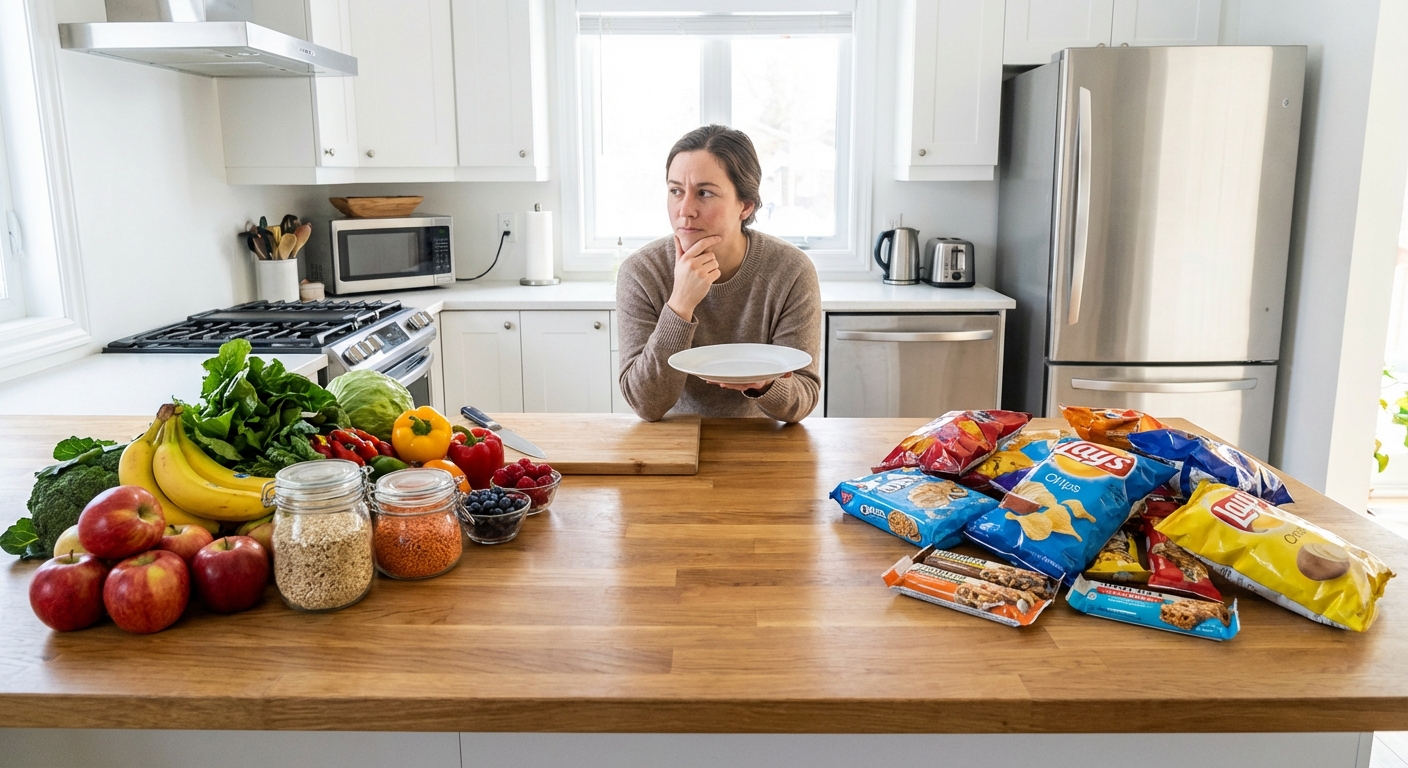
You make dozens of food decisions every day, but one of them has an outsized impact on your vitality: whole foods vs. processed foods. This single distinction influences your energy levels, mood, weight, and long-term health.
The Food Choice That Matters More Than You Think
You don’t need a perfect diet—but understanding this comparison gives you the power to shift your habits in a big way, with surprisingly small changes.
What Are Whole, Minimally Processed, and Ultra-Processed Foods?
Let’s simplify the categories.
Whole Foods
These are foods that are as close as possible to their natural form:
- Vegetables and fruits
- Whole grains (oats, brown rice, quinoa, barley)
- Legumes (beans, lentils, chickpeas)
- Nuts and seeds
- Eggs, plain yogurt, unprocessed meats, and fish
They’re rich in fiber, vitamins, minerals, and plant compounds your body loves.
Minimally Processed Foods
These foods have been slightly altered for convenience or safety, but their natural structure is mostly intact:
- Frozen vegetables and fruits
- Canned beans (rinsed) and tomatoes
- Plain tofu, tempeh
- Nut butters with no added sugar or oils
- Rolled oats, plain yogurt, frozen fish
These are usually great staples in a modern, busy life.
Ultra-Processed Foods
These are heavily altered products, often containing ingredients you wouldn’t use at home:
- Sugary breakfast cereals
- Packaged cookies, cakes, pastries
- Soda and sweetened drinks
- Instant noodles, flavored chips, frozen pizza
- Candy bars, processed meats, many fast foods
They’re often high in added sugar, refined flours, unhealthy fats, and salt—and low in beneficial nutrients.
How Whole vs. Processed Foods Affect Your Body
1. Blood Sugar and Energy
- Whole foods: High in fiber → slower digestion → steady energy and fewer crashes.
- Ultra-processed foods: Low in fiber, high in refined carbs and sugars → rapid spikes and dips → fatigue, cravings, mood swings.
Over time, frequent spikes can contribute to insulin resistance and metabolic issues.
2. Hunger and Fullness
Whole foods naturally regulate appetite:
- Fiber and protein send clear “I’m full” signals.
- Healthy fats provide slow-burning fuel.
Ultra-processed foods are engineered to be hyper-palatable—easy to overeat and hard to stop.
3. Inflammation and Long-Term Health
Whole, colorful plant foods are packed with antioxidants and anti-inflammatory compounds.
Ultra-processed diets are linked in research to:
- Higher inflammation
- Increased risk of heart disease, type 2 diabetes, and certain cancers
- Poorer gut health and mood disturbances
You don’t have to swear off all processed food—but dialing down the ultra-processed fraction of your diet can dramatically improve your vitality.
Simple Food Swaps With Big Impact
You don’t have to change what you eat as much as how processed it is.
Try these swaps:
- Sweetened yogurt → plain yogurt + fruit + nuts
- Sugary cereal → oats with cinnamon, seeds, and berries
- White bread → whole grain or sprouted bread
- Chips → air-popped popcorn or nuts
- Soda → sparkling water with citrus
- Instant noodles → whole grain pasta or rice noodles with veggies and protein
Every upgrade adds nutrients and removes hidden sugar, salt, and low-quality fats.
5 Actionable Tips to Boost Vitality with Smarter Food Choices
Tip 1: Shop the Edges of the Store First
Most whole and minimally processed foods are found around the perimeter:
- Produce section (fruits and vegetables)
- Refrigerated sections (eggs, yogurt, tofu, fresh proteins)
- Some grains and frozen vegetables
Fill most of your cart here before venturing into the heavily packaged middle aisles.
Tip 2: Read Ingredient Lists, Not Just Nutrition Labels
A quick rule of thumb:
- Short ingredient list you recognize = usually better choice.
- Long list with many additives, colorings, or unpronounceable words = likely ultra-processed.
Ask yourself: “Would I cook with these ingredients at home?” If not, consider an alternative.
Tip 3: Build “Whole Food First” Meals
Instead of starting a meal with a packaged item, begin with a whole food:
- Base a meal around beans, lentils, or eggs—then add veggies and grains.
- Build bowls: grain + beans or lean protein + veggies + healthy fat.
- Use packaged foods as sidekicks, not the main act.
This flips the script—your diet becomes whole-food-based with a light sprinkle of convenience.
Tip 4: Prep Just One Thing per Week
Meal prep doesn’t have to mean hours in the kitchen. Choose one whole food to batch-prep:
- Cook a pot of brown rice or quinoa.
- Roast a tray of mixed vegetables.
- Prepare a batch of hard-boiled eggs or baked chicken.
- Soak and cook a big portion of beans or lentils.
Use this as your building block for easy, nutrient-dense meals all week.
Tip 5: Turn Snacks Into Mini-Meals
Most ultra-processed foods sneak into your diet through snacks. Upgrade them:
Instead of:
- Candy, chips, or pastries
Try:
- Fruit + nut butter
- Hummus + sliced veggies
- Plain yogurt + seeds
- Handful of nuts + a piece of fruit
These options are satisfying, blood-sugar-friendly, and packed with real nutrients.
A Realistic Approach: Better, Not Perfect
You don’t need to abandon all convenience foods. Some processed options are incredibly helpful:
- Frozen vegetables and fruits
- Canned beans and tomatoes
- Ready-to-eat salads
- Whole grain wraps
The goal is to shift your baseline:
- Make whole and minimally processed foods your foundation.
- Let ultra-processed foods be the rare exception, not the default.
Your Daily Nutrition Vote
Every meal is a quiet vote for the kind of health and energy you want.
By choosing foods closer to nature—most of the time—you:
- Stabilize energy and mood
- Support your gut and immune system
- Reduce your risk of chronic diseases
- Feel more vibrant, clear-headed, and resilient
You don’t have to overhaul everything at once. Start with one swap, one upgraded snack, one batch-prepped whole food. Over time, those small edits become a powerful, life-boosting pattern.