
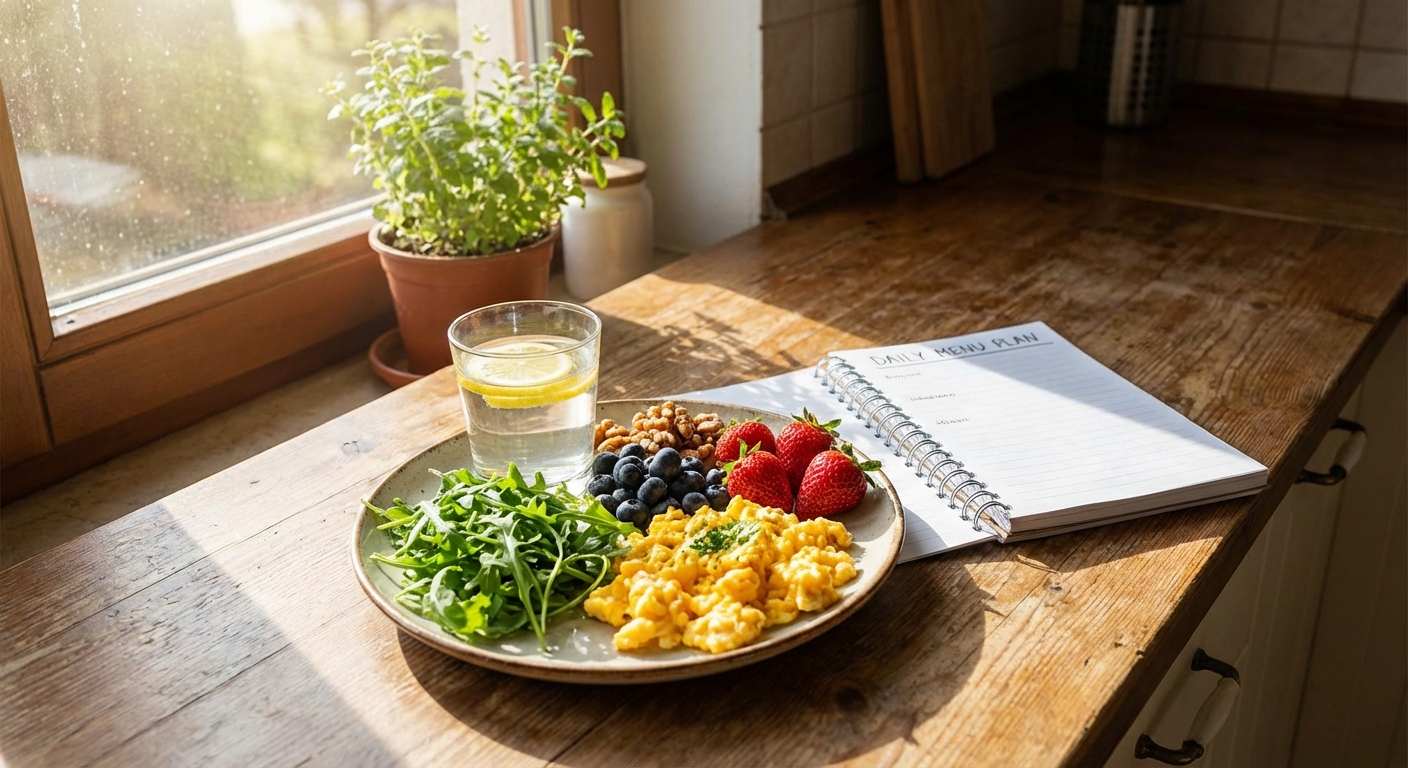
Vitality isn’t about being hyper or wired — it’s about feeling steady, strong, and clear-headed from morning to night. Your daily menu can either drain that vitality or build it.
What It Really Means to “Eat for Vitality”
This guide walks you, step by step, through designing a day of eating that supports natural energy, hormone balance, and overall wellness. You don’t need exotic superfoods or complicated recipes — just smart structure and a few powerful habits.
Step 1: Start Your Day With a Stability Breakfast
The first meal you eat sets your metabolic “tone” for the rest of the day. A high-sugar, low-protein breakfast primes you for cravings and energy dips. A balanced breakfast tells your body: we’ve got steady fuel coming; no need to panic or crash.
Build a stability breakfast with:
- Protein (20–30 g) – eggs, Greek yogurt, cottage cheese, tofu, beans, protein smoothie
- Fiber-rich carbs – oats, berries, whole-grain toast, chia pudding, sweet potatoes
- Healthy fats – avocado, nuts, seeds, nut butter, olive oil
Examples:
- Veggie omelet cooked in olive oil with a side of berries
- Greek yogurt parfait with oats, chia seeds, berries, and walnuts
- Smoothie with spinach, frozen berries, unsweetened yogurt, flaxseeds, and a scoop of protein powder
This approach supports blood sugar balance, satiety, and mental clarity to start your day.
Step 2: Use the “Four Pillars” to Plan Every Meal
Think of each meal as a simple framework instead of a recipe:
Color – 2+ colors of vegetables or fruit
Protein – plant or animal, about a palm-sized portion
Smart carbs – whole grains, legumes, or starchy vegetables
Healthy fat – a thumb to tablespoon-size portion
When you hit all four, you cover most of your nutritional bases.
Sample lunch ideas using the four pillars:
- Quinoa bowl: quinoa (carb), chickpeas + feta (protein), spinach + tomatoes (color), olive oil dressing (fat)
- Salmon plate: baked salmon (protein + fat), roasted sweet potato (carb), steamed broccoli + carrots (color)
- Tofu stir-fry: tofu (protein), mixed veggies (color), brown rice (carb), sesame oil + cashews (fat)
This structure is flexible and works for meal-prepping, cooking for a family, or eating on the go.
Step 3: Anchor Your Day With Hydration Rituals
Hydration is one of the simplest ways to support digestion, circulation, and energy — and yet it’s often overlooked.
Build hydration into existing habits so you don’t have to “remember” it:
- 1 glass of water right after you wake up
- 1 glass with each meal
- 1 bottle at your desk (refill 2–3 times)
- Herbal tea or infused water in the afternoon to replace sugary drinks
To add extra nutrition, try:
- Slices of lemon or orange (vitamin C)
- Smashed berries + mint leaves
- Cucumber + ginger
Hydration also supports healthy skin, joint lubrication, and optimal kidney function — all essential aspects of vitality.
Step 4: Snack With Purpose, Not Panic
Random snacking can lead to overeating and sluggishness, but intentional snacking can stabilize your energy and prevent nighttime binges.
Use this simple rule: each snack should have at least 2 of the 3 — protein, fiber, healthy fat.
Energizing snack ideas:
- Carrot sticks + hummus (fiber + fat + protein)
- Apple slices + peanut butter (fiber + fat + a little protein)
- Handful of nuts + a piece of fruit (fat + fiber)
- Cottage cheese with cucumber or tomato (protein + fiber)
If you’re not sure whether you’re truly hungry, drink a glass of water and wait 10–15 minutes. If you’re still hungry, go for a balanced snack.
Step 5: Make Dinner Work For Your Sleep, Not Against It
Evening meals that are extremely heavy, greasy, or sugary can disrupt sleep. Poor sleep then undermines your hunger hormones, cravings, and energy the next day.
Aim for dinners that are:
- Satisfying but not stuffed – you should feel comfortably full
- Lower in sugar and refined starches – avoid big desserts or huge pasta portions late at night
- Rich in vegetables and moderate protein – these support digestion and overnight repair
Calming dinner ideas:
- Baked fish with roasted vegetables and a small portion of brown rice
- Lentil and vegetable stew with a side salad
- Stir-fried tofu and mixed veggies over cauliflower rice or a smaller portion of whole grain rice
If you crave something sweet after dinner, choose a small, mindful treat like a square or two of dark chocolate, baked apple with cinnamon, or berries with a spoonful of yogurt.
5 Practical Tips to Supercharge Your Daily Menu
Here are five actionable strategies you can plug into your routine right away to upgrade your nutrition and vitality.
1. Plan 1–2 “Default Meals” for Busy Days
Create go-to breakfasts, lunches, or dinners you can throw together quickly when life is hectic.
Example defaults:
- Breakfast: Overnight oats with chia, berries, and seeds
- Lunch: Pre-chopped salad mix + rotisserie chicken + olive oil and vinegar
- Dinner: Frozen veggie mix + tofu or shrimp stir-fry over microwavable brown rice
Having defaults prevents the “I’m too tired, I’ll just order junk” spiral.
2. Pre-Cut or Pre-Wash Veggies Once, Use Them All Week
Vegetables are often skipped because of prep time. Solve that upfront.
- Set aside 15–20 minutes once or twice a week to wash, chop, and store veggies in clear containers.
- Keep them visible in the fridge.
- Use them as salad bases, stir-fry mixes, or snack platters.
The easier your veggies are to grab, the more you’ll eat them.
3. Use the “Protein First” Rule When Eating Out
Restaurants often load meals with cheap carbs and fats. You can still enjoy eating out while supporting your body.
When scanning the menu, ask:
- Where is my protein?
- Where are my veggies?
Then decide. Think grilled fish with vegetables, steak with a side salad, buddha bowls, or fajitas without overdoing the tortillas.
You don’t have to be perfect — just more intentional.
4. Keep a “Vitality Drawer” at Work or Home
Stock a drawer or shelf with energizing staples so you’re never at the mercy of vending machines.
Fill it with:
- Nuts and seeds
- Low-sugar granola or oat bars
- Canned beans or tuna (if appropriate)
- Herbal teas
- Dark chocolate
This simple environment shift can dramatically change your daily choices.
5. Do a Weekly 5-Minute Food Reflection
Once a week, ask yourself:
- Which meals made me feel energized and satisfied?
- Which meals left me bloated, sleepy, or craving more?
Write down one habit to repeat and one habit to adjust next week. Over time, you’re building a personalized nutrition playbook for your body.
The Big Picture: Consistency Over Perfection
Eating for vitality doesn’t mean never touching dessert or never ordering takeout. It means your baseline pattern supports your mood, focus, and long-term health.
If most of your days:
- Start with a balanced breakfast
- Follow the four-pillar meal structure
- Include planned, purposeful snacks
- Respect your sleep with smarter dinners
- Layer in the five tips above
…you are firmly on the path to natural, sustainable wellness.
Focus on small, repeatable wins. Your energy, digestion, and resilience will rise to meet the quality of the fuel you give your body.
Vitality is not a mystery — it’s a pattern you build, one nourishing choice at a time.