
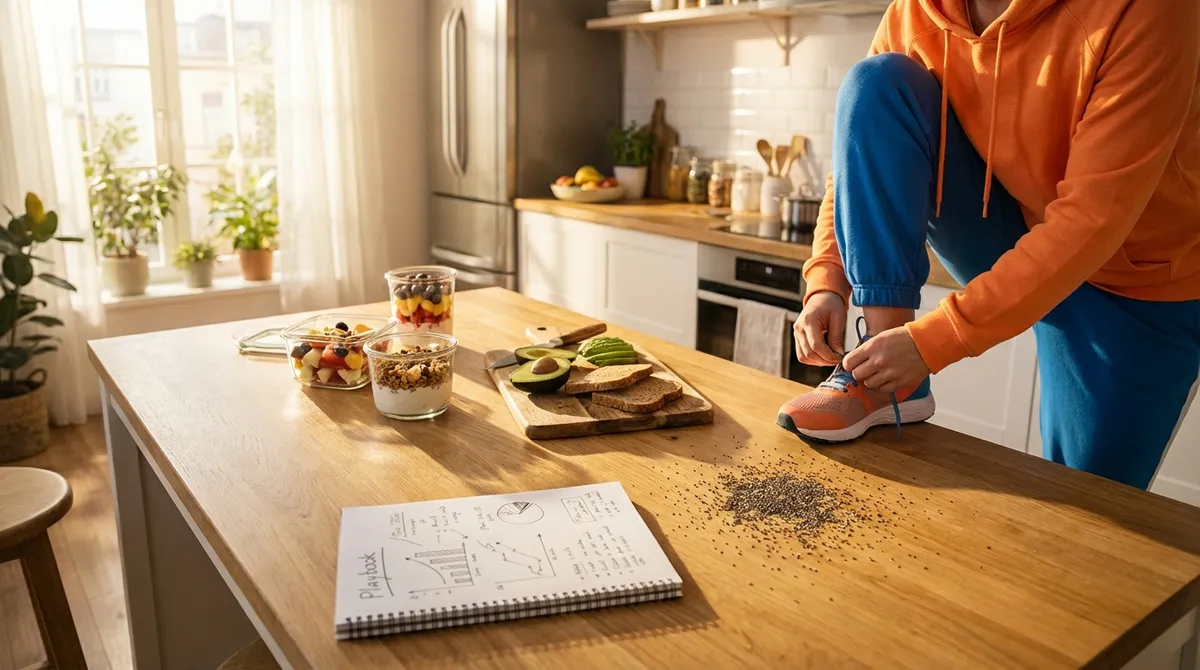
If your energy swings harder than your morning coffee habit, your plate might be the real power source you’re missing. Nutrition isn’t just about calories or cutting things out—it's about building a steady stream of energy, focus, and mood support from the inside out. This is your playbook for turning what you eat into an all-day vitality engine, without fad diets, impossible rules, or boring meals.
Let’s turn your everyday food choices into everyday power.
Why Energy Starts in Your Gut (Not Your Coffee Cup)
That “afternoon crash” you blame on work might actually start in your digestive system. Inside your gut lives a massive community of bacteria—your microbiome—that helps break down food, produce certain vitamins, and communicate with your immune system and even your brain.
When you feed your gut mostly ultra-processed foods, added sugars, and low-fiber snacks, your blood sugar spikes and crashes, inflammation can increase, and your “fuel” burns out quickly. But when you build meals around whole foods—think colorful plants, quality proteins, and healthy fats—you support more stable blood sugar, better digestion, and more consistent energy.
Here’s the big shift: instead of asking “Is this food good or bad?”, ask, “Will this keep my energy stable for the next 3–4 hours?” Foods that digest slowly, contain fiber, and combine protein, healthy fats, and complex carbs are your new best friends.
Tip 1: Build a “Staying Power” Plate, Not a Snack Plate
Most people eat like they’re always “snacking” even at meals: a little here, a little there, but not enough of what sustains you. A staying power plate is designed to keep you satisfied and energized for hours, not 45 minutes.
Use this simple formula for your main meals:
- Half your plate: Colorful plants (vegetables, fruits, beans)
- A quarter of your plate: Protein (eggs, fish, tofu, tempeh, Greek yogurt, chicken, lentils)
- A quarter of your plate: Slow-burning carbs (oats, quinoa, brown rice, sweet potato, whole-grain bread)
- A “thumb” of healthy fats: Nuts, seeds, avocado, olive oil, tahini, nut butter
Practical swaps you can make today:
- Replace sugary cereal with oats + Greek yogurt + berries + chia seeds.
- Trade a plain pasta dinner for whole-grain pasta + chickpeas + sautéed veggies + olive oil.
- Upgrade toast-and-butter to whole-grain toast + avocado + egg.
This simple structure is less about perfection and more about rhythm—hit that combination most of the time, and you’ll feel the difference in cravings, focus, and mood.
Tip 2: Hydration With a Purpose (Beyond “Drink More Water”)
Dehydration can feel suspiciously like “I’m just tired” or “I can’t focus today.” Even mild fluid loss (as little as 1–2% of body weight) can impact energy, brain performance, and physical endurance.
Instead of vaguely aiming to “drink more water,” give your day a hydration game plan:
- Front-load your fluids: Drink a full glass of water within 30–60 minutes of waking to kickstart circulation and digestion.
- Use a simple rule: Aim for clear to pale-yellow urine as your visual hydration cue.
- Add electrolytes when needed: If you’re sweating a lot (exercise, hot weather), add a pinch of sea salt and a splash of citrus to water, or use a low-sugar electrolyte drink.
- Eat your water: Fruits and vegetables like cucumber, oranges, melon, lettuce, and celery support hydration, too.
If plain water bores you, infuse it with lemon, lime, cucumber, or mint. Hydration doesn’t need to be complicated—but it does need to be consistent.
Tip 3: Time Your Carbs for All-Day Power, Not Sudden Crashes
Carbs are not your enemy; wild blood sugar swings are. When you eat fast-digesting carbs alone (pastries, white bread, candy, sweet drinks), your blood sugar can shoot up and then crash, leaving you tired, irritable, and craving more sugar.
Use these strategies to make carbs work for your energy:
- Always pair carbs with protein or fat.
- Apple + almond butter
- Banana + handful of nuts
- Whole-grain crackers + hummus
- Prioritize fiber-rich carbs earlier in the day. Oats, beans, lentils, quinoa, and whole grains provide longer-lasting fuel for work, movement, and focus.
- Use sweets strategically. Have dessert right after a meal rather than on an empty stomach; the protein, fat, and fiber in the meal will help blunt the blood sugar spike.
Notice how you feel 1–2 hours after different carb-heavy meals or snacks. If you regularly feel foggy or sleepy, that’s your body asking for slower-burning fuel.
Tip 4: Turn Snacks Into “Mini-Meals” That Actually Help You
Snacking isn’t the problem; unbalanced snacking is. A lone cookie, a few chips, or a sugary drink doesn’t just leave you hungry—it can drain your energy and mood.
Upgrade your snacks into “mini-meals” built from at least two of these three: protein, fiber-rich carbs, and healthy fats.
Try combinations like:
- Carrot sticks + hummus
- Greek yogurt + berries + pumpkin seeds
- Cottage cheese + cherry tomatoes + olive oil drizzle
- Handful of nuts + small piece of fruit
- Whole-grain toast + nut butter
Ask yourself before each snack: “Will this help me feel better in an hour?” If the answer is no, add one more real-food element (protein, fiber, or fat) to balance it out.
Tip 5: Use Color as Your Nutrient Shortcut
If you don’t want to memorize vitamin names or count micronutrients, use this rule: eat the rainbow over the course of the day.
Different colors usually mean different beneficial plant compounds:
- Red (tomatoes, strawberries, red peppers) – often rich in antioxidants like lycopene
- Orange/Yellow (carrots, sweet potatoes, mango) – typically high in beta-carotene and vitamin C
- Green (spinach, broccoli, kale, avocado) – packed with folate, magnesium, and fiber
- Blue/Purple (blueberries, purple cabbage, blackberries) – often rich in anthocyanins that support brain and heart health
- White/Brown (garlic, onions, mushrooms, oats) – can support immunity, gut health, and steady energy
Instead of obsessing over what to cut out, challenge yourself to add at least two colors to every meal. Over time, this boosts nutrient density, supports immunity, and feeds your gut microbiome—without feeling like a “diet.”
Conclusion
Vital energy isn’t built from a single superfood or a perfect diet—it's built from small, repeatable choices that support your body all day long. When you:
- Build staying-power plates
- Hydrate with intention
- Tame your carb crashes
- Turn snacks into mini-meals
- And fill your day with color
…you’re not just eating; you’re training your body to produce reliable, natural energy.
Start with one tip, layer in another next week, and let your results—not a trend—guide your next step. Your food is already part of your life; now it gets to be part of your power.
Sources
- Harvard T.H. Chan School of Public Health – Healthy Eating Plate – Visual guide and detailed explanation of balanced meal components
- U.S. National Institutes of Health – Hydration and Health – Research overview on the impact of hydration on physical and cognitive performance
- Centers for Disease Control and Prevention (CDC) – Added Sugars – Information on how added sugars affect health and energy
- Harvard Medical School – The Colorful Diet – Explains how different food colors relate to different nutrients and benefits
- Cleveland Clinic – Fiber: Why It Matters and How to Get More – Details on fiber’s role in blood sugar balance, digestion, and long-term health