
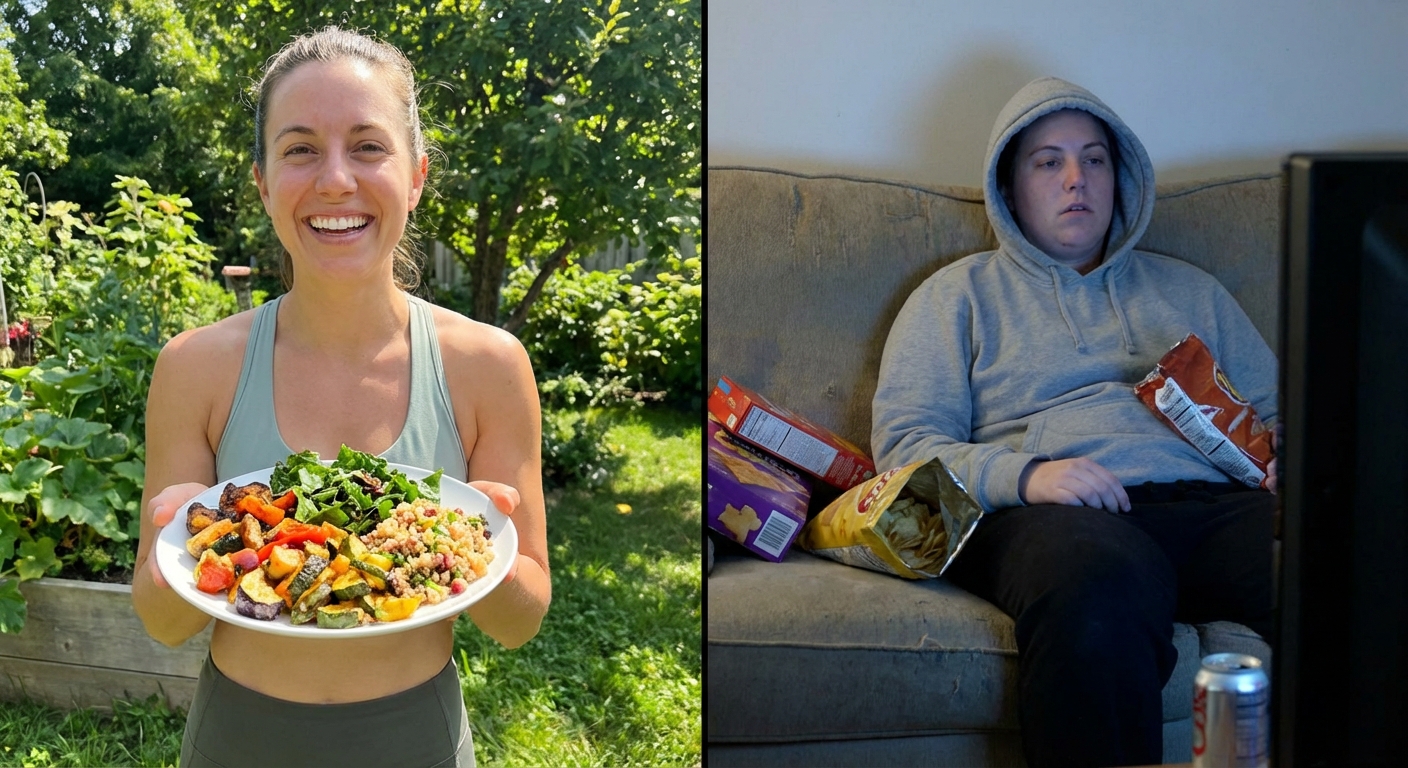
Every time you eat, you’re basically choosing between two broad categories:
The Food Choice Showdown You Make Every Day
- Plant-rich, minimally processed foods
- Heavily processed, convenience foods
Both are everywhere, both are convenient in different ways, and both directly shape how you feel — from your afternoon energy to your long-term health.
This article breaks down how these two food patterns impact your body and gives you simple, practical steps to shift toward plant-powered vitality without going extreme.
What Counts as “Plant-Rich” vs. “Processed”?
Plant-Rich, Minimally Processed Foods
These foods are close to their natural state and often recognizable as plants:
- Vegetables and fruits (fresh, frozen, or even canned in water)
- Whole grains (oats, quinoa, brown rice, barley)
- Legumes (beans, lentils, peas, chickpeas)
- Nuts and seeds
- Herbs and spices
- Plant-based or animal proteins prepared simply (tofu, eggs, fish, chicken, etc.)
These foods typically contain fiber, vitamins, minerals, and phytonutrients that support resilience, immunity, and energy.
Heavily Processed Foods
These are foods that are industrially refined and often high in added sugars, unhealthy fats, and sodium.
Examples:
- Sugary drinks, energy drinks, and sodas
- Packaged cakes, cookies, pastries, and candy
- Instant noodles, frozen pizzas, and many fast foods
- Refined white bread and ultra-soft rolls with long ingredient lists
- Highly flavored chips and snacks
Not all processing is bad — freezing vegetables is processing! The issue is ultra-processing, where most of the original fiber and nutrients are stripped away and replaced with additives.
How These Choices Affect Your Energy
The Plant-Rich Advantage
Plant-rich meals:
- Stabilize blood sugar thanks to fiber and slower-digesting carbs
- Provide crucial micronutrients (magnesium, potassium, B vitamins, antioxidants)
- Support a healthy gut microbiome, which plays a major role in mood, digestion, and even immune health
Result: you feel more sustained energy, fewer extreme highs and lows, and better focus.
The Processed Food Downside
Heavily processed foods:
- Spike blood sugar quickly, followed by a crash
- Are low in fiber, leaving you hungrier sooner
- Often contain additives and excess sodium that can bloat or dehydrate you
Result: you may feel sluggish, foggy, and craving more soon after eating. Over time, this pattern can also contribute to weight gain, insulin resistance, and low mood.
Mood and Mind: Food’s Quiet Influence on Your Brain
Your brain is metabolically demanding — it uses a large share of your daily energy. What you eat influences:
- Neurotransmitter production (like serotonin and dopamine)
- Inflammation levels, which can affect mood and cognition
- Gut-brain communication, since many neurotransmitters are produced in the gut
Plant-rich diets, especially those similar to the Mediterranean pattern, are associated with lower rates of depression and anxiety in many studies. They’re rich in:
- Omega-3 fats (from fish, walnuts, chia seeds)
- B vitamins
- Antioxidants from colorful produce
Ultra-processed diets are linked to higher levels of inflammation and higher risk of mood disturbances. This doesn’t mean a single fast-food meal will cause depression, but patterns over time matter.
5 Actionable Tips to Shift Toward Plant-Powered Vitality
You don’t need a perfect diet or a new identity as “plant-based” to benefit. Small changes steadily tilt the balance in your favor.
1. Use the “Plant + Protein” Rule for Every Meal
Instead of obsessing over eliminating foods, add two things first:
- At least one plant food (vegetables, fruit, beans, whole grains)
- At least one protein source (fish, eggs, beans, tofu, yogurt, chicken)
Example upgrades:
- Having pasta? Add sautéed veggies and a protein like beans, chicken, or tofu.
- Making a sandwich? Include lettuce, tomato, cucumber, or grated carrot inside.
- Ordering takeout? Choose a dish that includes vegetables and a clear protein.
Over time, this shifts your meals away from “just carbs and fat” toward nutrient density.
2. Aim for 10 Plant Foods Per Day
Variety matters as much as quantity. Different plants feed different gut microbes and deliver different nutrients.
Try counting how many distinct plant foods you eat in a day:
- Each fruit, vegetable, grain, legume, nut, or seed = 1 point.
For example:
- Breakfast: oats, banana, blueberries, chia seeds, walnuts (5)
- Lunch: lettuce, tomato, cucumber, chickpeas, brown rice (5)
- Snack: apple (1)
- Dinner: broccoli, carrots, lentils, quinoa (4)
That’s 15 different plants in one day.
You can start with a goal of 10 per day and build up. This naturally pushes processed foods out of the spotlight without forcing strict rules.
3. Practice the “Swap, Don’t Stop” Method
Instead of simply trying to “stop eating junk,” which often leads to frustration, swap one processed item for a less processed cousin.
Try these ideas:
- Sugary cereal → Oats topped with fruit and nuts
- White bread → Whole-grain or seeded bread
- Chips → Air-popped popcorn or roasted chickpeas
- Soda → Sparkling water with citrus
- Instant noodles → Quick-cooking whole grains with frozen veggies and soy sauce
Each swap keeps the comfort and convenience, but adds more fiber, nutrients, and stability.
4. Build a Plant-Rich Lunch as Your Daily Anchor
If changing every meal feels overwhelming, make lunch your non-negotiable plant meal.
Your goal: at least half your lunch volume from plants.
Easy options:
- Big salad with beans or grilled chicken, nuts, and olive oil dressing
- Grain bowl with brown rice or quinoa, roasted veggies, chickpeas, and tahini
- Leftover roasted vegetables from dinner rolled into a whole-grain wrap with hummus
If breakfast is rushed and dinner varies, a strong lunch can stabilize your day.
5. Stock a “Plant-First Kitchen” Without Overthinking
Your environment shapes your choices, especially when you’re tired.
Keep these items on hand to make plant-rich eating effortless:
Pantry:
- Canned beans (black, kidney, chickpeas, lentils)
- Rolled oats and whole grains
- Tomato sauce or canned tomatoes
- Nuts, seeds, and nut butters
- Spices and dried herbs
Freezer:
- Mixed vegetables
- Frozen berries or mango chunks
- Frozen edamame or peas
Fridge:
- Pre-washed salad mixes
- Carrots, cucumbers, cherry tomatoes
- Hummus or other bean dips
- Plain yogurt
With these building blocks, you can throw together plant-forward meals in minutes — no fancy recipes required.
Do You Need to Be 100% Plant-Based?
Not necessarily. Many people feel fantastic on plant-forward rather than fully plant-exclusive diets.
A balanced approach could mean:
- Keeping animal proteins as supporting players, not the whole plate
- Centering meals around vegetables, legumes, and whole grains
- Treating highly processed foods as occasional extras, not daily staples
For some, fully plant-based works beautifully; for others, including fish, eggs, or yogurt feels best. The key is minimizing ultra-processed foods and maximizing real, nutrient-dense ones.
How to Notice the Difference in Your Own Body
Give yourself a simple 7-day experiment:
- Add plants to every meal.
- Swap at least one processed snack or drink per day for a plant-based option.
Keep a quick daily note on:
- Energy (1–10) - Mood (1–10) - Digestion (comfortable, bloated, sluggish, etc.)
Most people notice:
- Fewer crashes
- More regular digestion
- Slightly lighter, clearer feeling after meals
These small wins are feedback from your body that you’re moving in the right direction.
The Bottom Line: Small Shifts, Big Impact
The real battle isn’t “plants vs. processed” — it’s intentional nourishment vs. autopilot eating.
By:
- Prioritizing plants and protein at every meal
- Aiming for a variety of plant foods
- Swapping, not stopping, processed favorites
- Anchoring your day with a plant-rich lunch
- Stocking a plant-first kitchen
…you gradually transform the way your body is fueled.
You don’t need perfection to feel the benefits. You just need consistent nudges in the direction of real, colorful, minimally processed food.
That’s the foundation of natural energy, stable mood, and long-term wellness — one everyday choice at a time.